


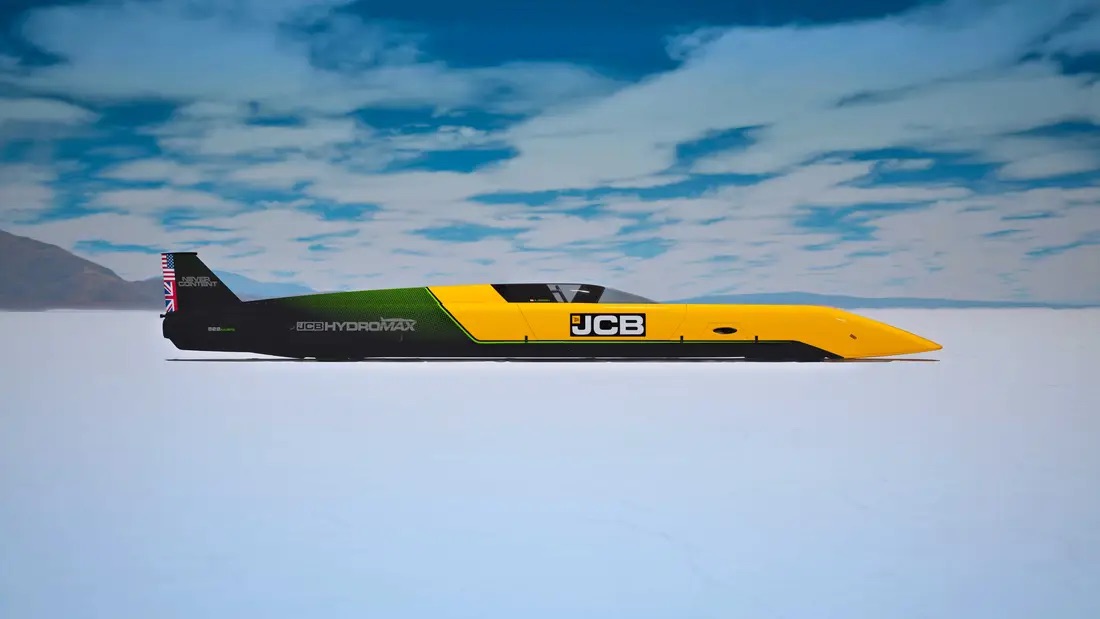
JCB Sets Out to Break Land Speed Record with Hydrogen Power
JCB is once again pushing the boundaries of British engineering, setting its sights on a new land speed record using hydrogen power. The British manufacturer has revealed plans for a 32‑foot, hydrogen‑powered car that will return the brand to the legendary Bonneville Salt Flats in Utah, exactly 20 years after JCB Dieselmax rewrote the history books.
Over the past five years, JCB has invested £100 million into hydrogen internal combustion engine technology, with hydrogen‑powered construction machines now entering production. The latest project takes that innovation to its most extreme test yet. This August, Wing Commander Andy Green OBE, the fastest man on earth, will once again take the wheel, this time driving the hydrogen‑powered JCB Hydromax. The project is led by JCB with support from Prodrive and Ricardo, and aims to demonstrate the real‑world performance and durability of hydrogen engines under the most demanding conditions.
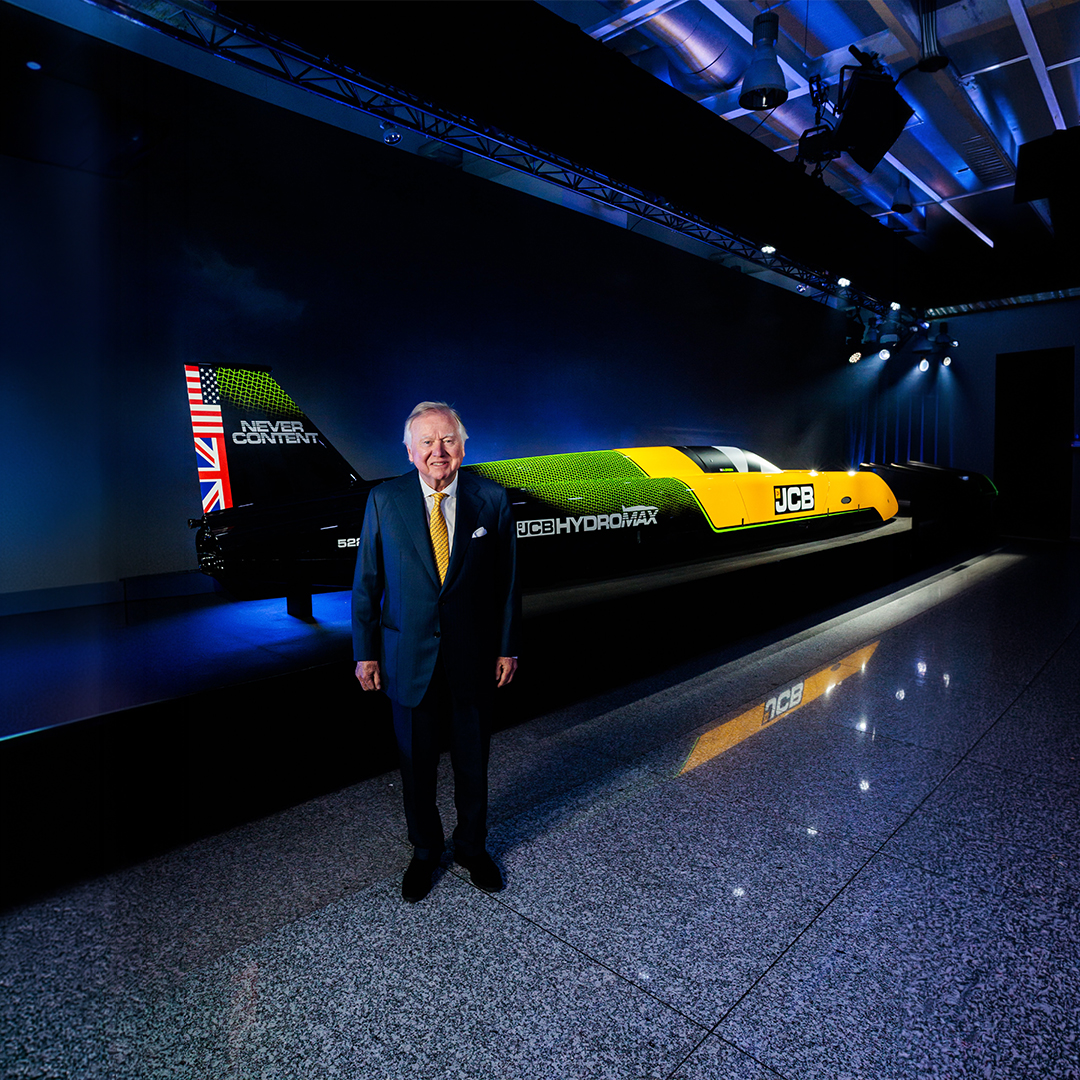
JCB Chairman Anthony Bamford, who has spearheaded the company’s hydrogen programme, said:
“Britain has a proud heritage of setting speed records and, as a British company, I’m excited to challenge for a new one using hydrogen. This is not just about speed, it’s about showcasing the world-class engineering talent we have here in the UK and the robustness of our new hydrogen engines.“JCB Dieselmax was always a bit of an unusual idea, but it proved a point. Putting an advanced engine into a land-speed car showed the world what it could do in a way a digger never could. It’s the same thinking with hydrogen today. If you’re serious about emissions, you have to be serious about hydrogen – and a land-speed project is the perfect way to prove it.”
He added: “As for the speed, we’re aiming for with JCB Hydromax, we intend to beat 350 mph.”
The new JCB Hydromax car is lighter, more powerful and faster than its diesel predecessor, producing a combined 1,600 bhp from two production‑based hydrogen engines. Testing will begin in the UK before the team heads to Bonneville SpeedWeek, the world’s premier land speed racing event governed by the Southern California Timing Association (SCTA). Following this, the team will remain on location to pursue officially recognised world records overseen by the Fédération Internationale de l’Automobile (FIA).
Andy Green, the only person to break the sound barrier on land, said:
“Twenty years ago, JCB took two of its diesel engines, sprinkled some magic engineering dust on them and put them into a racing car. We raced the JCB Dieselmax up to an astonishing speed – and a new FIA world record – of just over 350 mph. Today, that car is still the fastest diesel-engined vehicle in history. Now we’re going back to the Bonneville Salt Flats, spiritual home of the World Land Speed Record, with JCB’s new hydrogen engines.
“The ‘JCB Hydromax’ car is lighter, more powerful and faster than its predecessor of 20 years ago. Once again, we’re going to show the world just how good British engineering and technology really is. This August we’re going to smash the hydrogen-powered vehicle record in the world’s fastest (and most exciting!) zero-emissions vehicle. I can’t wait.”
The hydrogen record attempt comes ahead of the opening of JCB’s new $500 million manufacturing facility in San Antonio, Texas, a one million square foot site set within a 400‑acre campus that will employ 1,500 people producing machines for the US market. It also adds to a long legacy of record‑breaking innovation, including the JCB Fastrac becoming the world’s fastest tractor in 2019 and the JCB GT setting the fastest backhoe loader record in 2014.
With Hydromax, JCB once again combines boundary‑pushing performance with forward‑thinking technology, proving that hydrogen has a serious role to play in the future of high‑performance, zero‑emissions engineering.
Want to get hold of your very own JCB machinery? Contact our sales team today.